
HRA has established the Treatment Equity project to advocate for changes to the Opioid Treatment Program (OTP) to ensure a modern, accessible and person-centred program for all service users. Treatment Equity is an ongoing program of work and priority area for HRA. See below for information on the work we are doing and drop back regularly for updates…
Breaking News!!! Planned discontinuation of SUBUTEX in Australia
9 September 2026
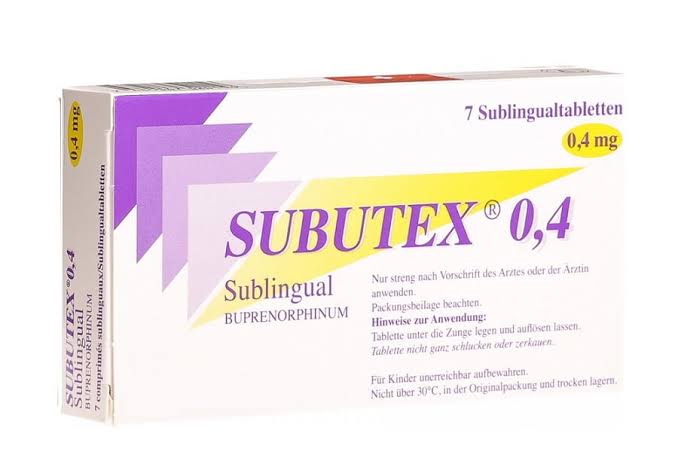
Barely two months after the news that Sublocade® (buprenorphine modified release solution for injection) is being withdrawn from the Australian market at December 2026, HRA has been advised by Indivior Pty Ltd of the planned discontinuation of SUBUTEX® (buprenorphine sublingual tablets) in Australia.
The withdrawal of SUBUTEX® includes the 0.4 mg, 2 mg and 8 mg tablet formulations, which are expected to remain available until 31 December 2027. According to the 2025 NOPSAD data, approximately 13% of people on OTP in Australia are currently on SUBUTEX® including women who are pregnant and those who cannot tolerate the SUBOXONE® combination product. Indivior has advised that the decision relates to changes in its business structure and manufacturing arrangements and is not related to any quality, safety or efficacy concerns with SUBUTEX®.
Important to note, is that SUBOXONE® Film is not affected by this announcement, although many in the field are increasingly concerned for the ongoing availability of SUBOXONE® Film in Australia due to these recent .
The extended notice period provides time for people currently prescribed SUBUTEX® to discuss their ongoing treatment with their prescriber and, where necessary, plan for any future transition. HRA strongly encourages these discussions to occur well ahead of the discontinuation date and to be guided by each person’s individual circumstances, preferences and treatment needs.
For HRA, the announcement also reinforces the importance of treatment choice and continuity of care within Australia’s Opioid Treatment Program. Changes in medicine availability can have significant consequences for people who rely on opioid treatment, particularly when an established treatment is working well for them. People affected by the discontinuation should be meaningfully involved in decisions about their treatment and provided with clear information and sufficient time to consider the available options.
The announcement comes at an important time for national OTP reform. The recently agreed National Consensus for Action (see link in story below) calls for greater choice in opioid treatment medicines, person-centred and individualised care, informed consent and shared decision-making, alongside stronger national planning to ensure reliable and equitable access to treatment.
HRA will continue to monitor the implications of the planned discontinuation and engage with government, clinicians, community organisations and people with living and lived experience to support treatment continuity, choice and a well-planned transition ahead of December 2027.
OTP National Consensus for Action Roundtable
On 7 September 2026, stakeholders from across Australia came together at Parliament House in Canberra for the National Consensus for Action Roundtable on Opioid Dependence Treatment (ODT). The Roundtable brought together people with living and lived experience, peer and harm reduction organisations, clinicians, pharmacists, nurses, researchers and other sector leaders to agree on the next steps needed to reform Australia’s opioid treatment system.
The Roundtable was the culmination of more than 12 months of growing cross-sector collaboration, catalysed in large part by HRA’s National Opioid Treatment Program Policy Brief. The Policy Brief helped establish a shared reform agenda and provided the foundation for the National Consensus Statement, with its six key recommendations forming the basis of the six principles ultimately agreed at the Roundtable.
The resulting National Consensus for Action Statement (linked below) achieved 94% agreement among participants. It calls for action to embed person-centred and rights-based care; address inequity and improve access; strengthen national policy and funding; expand the ODT workforce; modernise models of care and service delivery; and better integrate ODT into mainstream primary healthcare and community pharmacy. Importantly, the Consensus calls for a shift away from cultures of control towards rights, trust, partnership and health equity, alongside meaningful treatment choice, autonomy, informed consent and living/lived experience leadership.
HRA Executive Director Dr Annie Madden provided one of the opening presentations at the Roundtable. HRA was strongly represented throughout the day by Dr Madden, HRA Board members Dr Richard Di Natale and Dr Jake Rance, and Anna McVinish CF, HRA Expert Adviser.
The Consensus Statement is not intended to sit on a shelf. Roundtable participants committed to advocating for implementation across federal, state and territory governments, taking the Consensus into key government and sector forums, and establishing clear responsibility and mechanisms for tracking progress. HRA will now undertake a significant program of strategic, high-level advocacy to help turn these commitments into action. The national collaboration built over the past year will also continue, with work underway to establish a new implementation group to drive the next phase of reform.
The collaboration will also take the discussion to the 2026 APSAD Conference in Perth, where an abstract has been accepted for a symposium panel on the national reform agenda, with HRA’s Executive Director joining the panel.
More news on these developments and the next phase of HRA’s Treatment Equity work will follow soon…
HRA Opioid Treatment Program (OTP) Webinar – 11 August 2026
In the lead-up to upcoming National Consensus for Action Forum: A Roundtable on Australian Opioid Dependence Treatment being held in Canberra on 7 September at Parliament House, HRA held the first in a series of three pre-forum webinars to share emerging evidence and promote discussion in the lead-up to the Canberra event. The webinar was well-attended, and participants engaged in a lively discussion on OTP in Australia.
If you missed the webinar and would like to watch it back, you can do so on HRA’s You Tube channel here: https://youtu.be/h-JRZYjeWXE
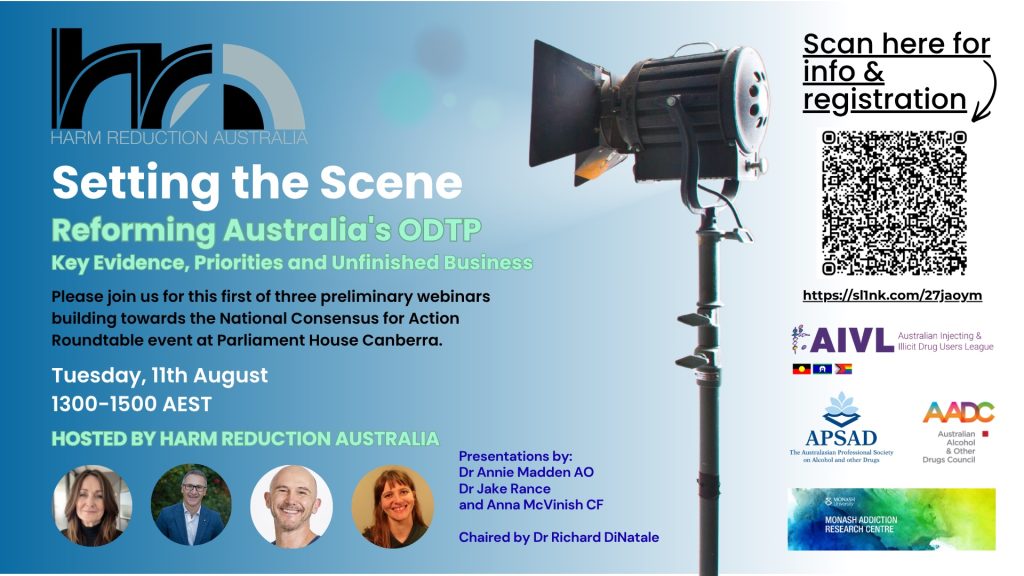
Dr Annie Madden also presented in the AIVL webinar (webinar 3 in the lead-up series) on her top 5 tips for conducting strategic advocacy in the opioid treatment space. If you would like to watch Annie’s presentation and/or watch back the other two webinars in this series, visit the APSAD website for direct links to the videos.
Breaking News… Changes to Legislation to Allow Registered Nurses to Prescribe PBS Medicines…
2 July 2026

The Australian Government has today passed historic legislation to allow authorised nurses to prescribe Pharmaceutical Benefits Scheme (PBS) medicines.
The Health Legislation Amendment (Prescribing of Pharmaceutical Benefits) Bill 2025 will amend the National Health Act 1953 to allow authorised nurses to prescribe medicines subsidised by the PBS, in partnership with an authorised health practitioner.
There are currently over 400,000 RNs, who comprise approximately half of the Australian health workforce and are the most geographically widespread health profession.
This reform will be available to Registered Nurses (RNs) who have undertaken studies as required by the Nursing and Midwifery Board of Australia (NMBA).
The first RNs have already been endorsed by the NMBA, with others due to graduate in July. Changes to PBS administrative systems required to support it will be ready from 1 October 2026.
Read more here: https://www.health.gov.au/ministers/the-hon-mark-butler-mp/media/new-law-gives-registered-nurses-pbs-prescribing-powers-for-the-first-time?language=en
And some earlier articles from when these changes were first mooted:
And here: https://www.ahpra.gov.au/News/2025-09-30-More-access-to-prescribers
And here: https://www.acn.edu.au/nurseclick/registered-nurse-prescribing-takes-effect
Breaking News!!! SUBLOCADE Being Withdrawn from the Australian Market…
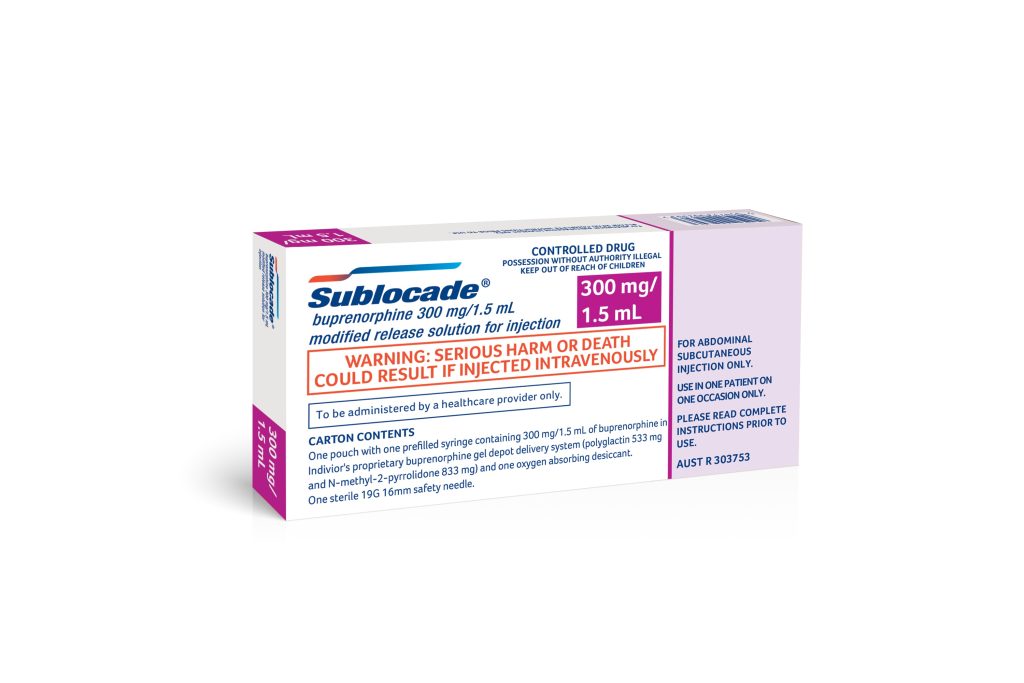
BEING WITHDRAWN
Indivior (the pharmaceutical company who manufacturers and distributes Sublocade® (buprenorphine modified release solution for injection) has formally notified that they will be withdrawing Sublocade® from the Australian market.
According to the company, the timeframe for the planned discontinuation is that SUBLOCADE® will continue to be available until the planned date of last supply: 11 December 2026. Existing stock will remain available, and PBS claims may continue to be made for SUBLOCADE® in accordance with PBS arrangements until 31 December 2026.
The company further stated that the lead-in timeframe is designed to allow treating clinicians sufficient time to review ongoing treatment needs with people currently on Sublocade® treatment and consider appropriate management options, based on each person’s clinical circumstances.
Information provided to HRA by Indivior further states that:
“This planned discontinuation reflects operational and commercial considerations and is not related to any new safety, efficacy or quality concern identified for SUBLOCADE®.”
HRA will continue to provide updates on this important development as information becomes available. At HRA we understand that this information may be extremely distressing for people currently on Sublocade® treatment.
To this end, we are working alongside other key organisations (including AIVL) to support the development of timely, accessible information for OTP service users and their families, as well as, clinicians, prescribers, pharmacists and allied services in within the sector. We are also aware that state & territory health departments are also working to respond to this issue and the questions it raises for OTP service users and other key stakeholders.
If you live in NSW, you may find the following information produced by NSW Health useful: https://www.health.nsw.gov.au/aod/professionals/Pages/sublocade-discontinuation.aspx
As soon as additional information and resources are available, HRA will upload them via our website and social media channels. Come back regularly for updates and be sure to follow us on social media for the latest information as it becomes available…
Treatment Equity Project Update (May – June 2026)…
HRA has been doing a lot of work in the OTP space across May and June including being involved in the planning and organising of the upcoming National Consensus for Action Forum: A Roundtable on Australian Opioid Dependence Treatment being held in Canberra on 7 September at Parliament House.
Despite recent reforms to the payment architecture for OTP medicines, significant system-level challenges continue to affect how ODTP is delivered and experienced across Australia. Key issues, as identified in HRA’s recent OTP Policy Brief: ‘Reforming Australia’s Opioid Treatment Program – Investing in Access, Equity & Sustainability’ (see below) include access, workforce shortages, lack of contemporary clinical guidelines and ongoing stigma and discrimination.
In this context, the Canberra forum will bring together a diverse range of stakeholders, including consumer and community organisations, people with lived experience of ODTP, clinicians and professional bodies, researchers, and government representatives and funders to form consensus on how to progress change in this important area of health. The forum aims to identify shared national priorities to improve access, quality, consistency, and resourcing of ODTP across Australia and will culminate in the development of an advocacy statement articulating a shared national vision for ODTP reform, including priority actions for governments and key stakeholders.
The event will be invitation only (due to space restrictions) with invitations going out in early July. The event will be an in-person event but interested stakeholders will be able to watch proceedings (without participation) online. For more information about the forum and attending as an online observer visit the APSAD website: https://www.apsad.org.au/education-training/national-consensus-for-action-forum-a-roundtable-on-australian-opioid-dependence-treatment or you can contact us via the details on our contacts page.
HRA Pre-Forum Webinar
To support the Canberra forum, HRA will be holding one of three pre-forum webinars designed to allow a broader range of stakeholders, than can attend the invitation only event, to have input into the development of the consensus advocacy statement that will be the outcome of the Canberra event. The HRA webinar will be held at 1 – 3pm (AEST) on Tuesday 11 August 2026. Further details on the webinar including registration information, speaker details, etc., will be posted on the HRA website and socials very soon, so please check back and make sure you are following us on your preferred social media platforms, so you don’t miss any information. We’d love to see you there!
Along with HRA webinar, two other webinars will be held in the lead-up to the Canberra forum: one focused on ODTP consumer perspectives being held by AIVL (https://aivl.org.au/) and a third and final webinar focused on ODTP clinical governance and research being held by MARC (https://www.monash.edu/medicine/ehcs/marc/home) for further information on these webinars visit the APSAD website: https://www.apsad.org.au/education-training/national-consensus-for-action-forum-a-roundtable-on-australian-opioid-dependence-treatment
Treatment Equity Project Update (April 2026)…
National OTP Advocacy Event (Sept 2026)
After the successful launch of HRA’s OTP Policy Brief in December last year (for more information see below), HRA has continued to advance the core goals of our Treatment Equity Project through ongoing collaborations with other key stakeholders in the OTP space. This work includes joining with many others to plan and organise an upcoming national OTP advocacy event to be held in Canberra in early September 2026. HRA is part of the advisory group for the event which is being led by the ACT peer-based drug user organisation, the Canberra Alliance for Harm Minimisation & Advocacy (CAHMA) and supported by the Australasian Professional Society for Alcohol & Other Drugs (APSAD). HRA is pleased that our recently released OTP Policy Brief and its targeted recommendations, will be used to inform the event including shaping the key advocacy/policy asks to government. For those who are interested in the event, we will be sure to post further details as soon as they become available – watch this space…
Joint RACP/AChAM OTP Advocacy

The first few months of 2026 have also seen the establishment of a new advocacy collaboration between HRA and the Royal Australasian College of Physicians (RACP) which includes the Australasian Chapter of Addiction Medicine (AChAM). HRA Executive Director, Dr Annie Madden AO and HRA Board member, Dr Richard Di Natale have been meeting regularly with key representatives of the RACP/AChAM to discuss and progress mutual advocacy priorities in relation to the Opioid Treatment Program in Australia. Although this collaboration is still in the early stages, work is already underway on advocacy towards revising and updating the National OTP Clinical Guidelines (which have not been updated since 2014), joint participation in the OTP Advocacy Event being planned for Sept 2026 in Canberra (above) and discussing opportunities to involve other relevant colleges and organisations in our advocacy work in the future.
AJGP Article on Stigma in OTP

HRA is also pleased to announce that HRA Executive Director, Dr Annie Madden AO has been invited to co-author an article with Dr Hester Wilson and two other colleagues, on the important topic of ‘Stigma for patients using alcohol & other drugs’ for the flagship publication of the Royal Australasian College of General Practice (RACGP), the Australian Journal of General Practice (AJGP). The article is currently in development and will be shared here once published. This new article will build on a piece originally published by Dr Wilson on this topic in March 2020 on ‘How Stigmatising Language Affects People Who Use Tobacco, Alcohol & Other Drugs’ which you can read here: https://www1.racgp.org.au/ajgp/2020/march/how-stigmatising-language-affects-people-in-austra
OTP Policy Brief
On 1 December 2025, HRA launched its new Opioid Treatment Program (OTP) Policy Brief: ‘Reforming Australia’s Opioid Treatment Program – Investing in Access, Equity & Sustainability’.
Australia’s Opioid Treatment Program (OTP) is a critical, evidence-based response to opioid dependence, that provides access to life-saving pharmacotherapy medications. HRA’s new Opioid Treatment Program Policy Brief outlines some of the key challenges facing the OTP in Australia and provides a series of evidence-based recommendations for creating a more responsive, accessible and sustainable OTP into the future.
Read our latest opinion piece on OTP reform…

To support the launch of our OTP Policy Brief on 2 December 2025, HRA published an opinion piece in Bio-Pharma Dispatch which speaks to HRA’s goals in developing the policy brief and steps out some of the most urgent reforms for the OTP in Australia in 2025. You can find the opinion piece: ‘Reforming Australia’s Opioid Dependence Treatment Program – From Red Tape to Person-Centred Care: https://pharmadispatch.com/news/reforming-australias-opioid-dependence-treatment-program-from-red-tape-to-person-centred-care
Breaking News…
There have been some recent reforms at the federal level to the Health Legislation Amendment (Removal of Requirement for a Collaborative Arrangement) Bill 2024 that have important implications for the ODT Program in Australia.
In May 2024, the legal requirement for Nurse Practitioners (NPs) and eligible midwives to be part of a ‘collaborative arrangement’ with a medical practitioner to provide certain subsidised services to patients was removed.
From 1 November 2024, NPs and eligible midwives can provide services subsidised by the MBS and prescribe certain medicines on the PBS without the need for a collaborative arrangement with a medical practitioner.
Harm Reduction Australia has been advocating for some time that NPs could be playing a much greater role in the delivery of ODT in Australia especially in regional and rural areas (but also metro and greater metro areas) where attracting and retaining GPs can be very challenging. We believe, these recent reforms remove some of the major barriers to this occurring.
HRA will continue to work with key stakeholders, through our Treatment Equity Project to make the most of this reform including how it might dovetail with last year’s PBS reforms (aka the ‘affordability reforms’) to create an even more accessible ODTP in Australia.
Deep Dive on OTP
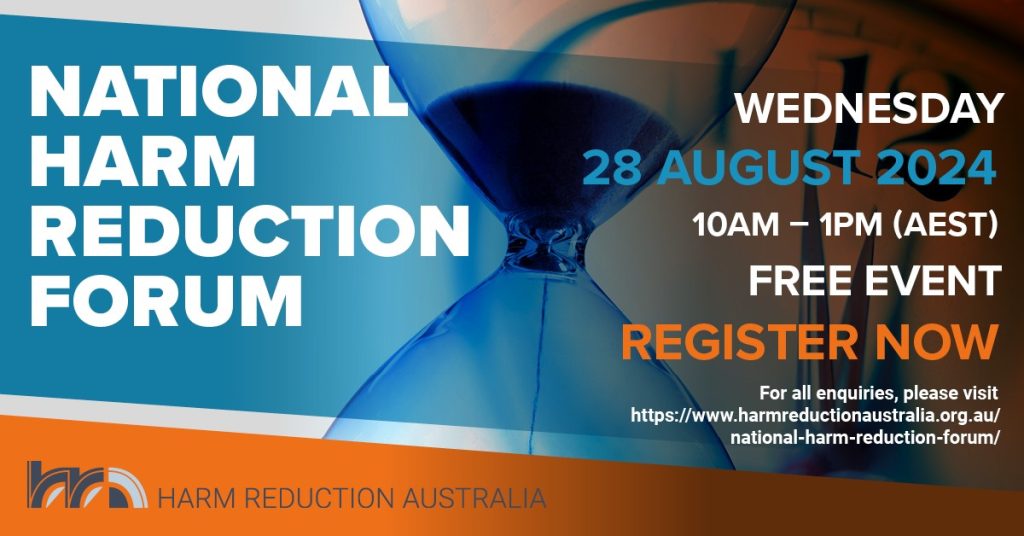
As part of the HRA 2024 National Harm Reduction Forum in August, we ran a series of ‘deep dives’ on key areas of priority for HRA. One of these deep dives focused on the Opioid Treatment Program and aimed to bring together key voices in the OTP space to discuss the current state of opioid treatment in Australia and to identify areas of reform and how to achieve change. It was a packed online forum with great discussion and audience questions, but unfortunately, as it was a breakout session in Zoom, we were unable to record the session, we can, however, provide an outline of our speakers/panellists:
Moderator: Annie Madden, HRA Executive Director
Panellists:
- Sarah Lord (PAMS/HRVic)
- Adam Searby (Drug & Alcohol Nurses Association – DANA)
- Donna Searles (Nurse Practitioner/Qld Prisons Health)
- Charles Henderson (Burnet Institute)
- Prof. Suzie Nielsen (Monash Addiction Research Centre)
- Brett Valance (Nurse Practitioner, Regional Victoria)
- Dr. Hester Wilson (GP/Addiction Medicine Specialist/RACGP)
Rapporteur: Dr Jake Rance (HRA Board member and senior researcher at CSRH, UNSW)
PBS Reforms
Across 2021 – 2023, HRA strongly advocated for the Australian Government to remove the financial discrimination within the PBS against people on OTP as a matter of urgency. On 1 July 2023, ground-breaking changes came into effect which meant for the first time, OTP medications (methadone and buprenorphine) were listed on the Pharmaceutical Benefits Scheme (PBS), capping the consumer co-payment for OTP service users and ensuring that people on OTP pay the same as other Australians to access their OTP medications.
In the lead-up to 1 July 2023, HRA produced infographics and fact sheets to assist service users and others to understand the impact of the changes. These resources are provided below along with other relevant information related to the reforms…


PBS Reform Fact Sheets
Additional information
Federal and NSW Government ODT PBS reform information and fact sheets
- Federal Government:
Federal Government ODT reform information and fact sheets
- NSW Government:
Treatment Equity Communiques
During an advocacy campaign to remove the discriminatory, private, daily dispensing fees that OTP service users have been forced to pay for decades, Treatment Equity produced a series of communiques aimed at keeping our stakeholders up-to-date on developments. You can read these here:
Treatment Equity Communique #1
Treatment Equity Communique #2
Treatment Equity Communique #3